
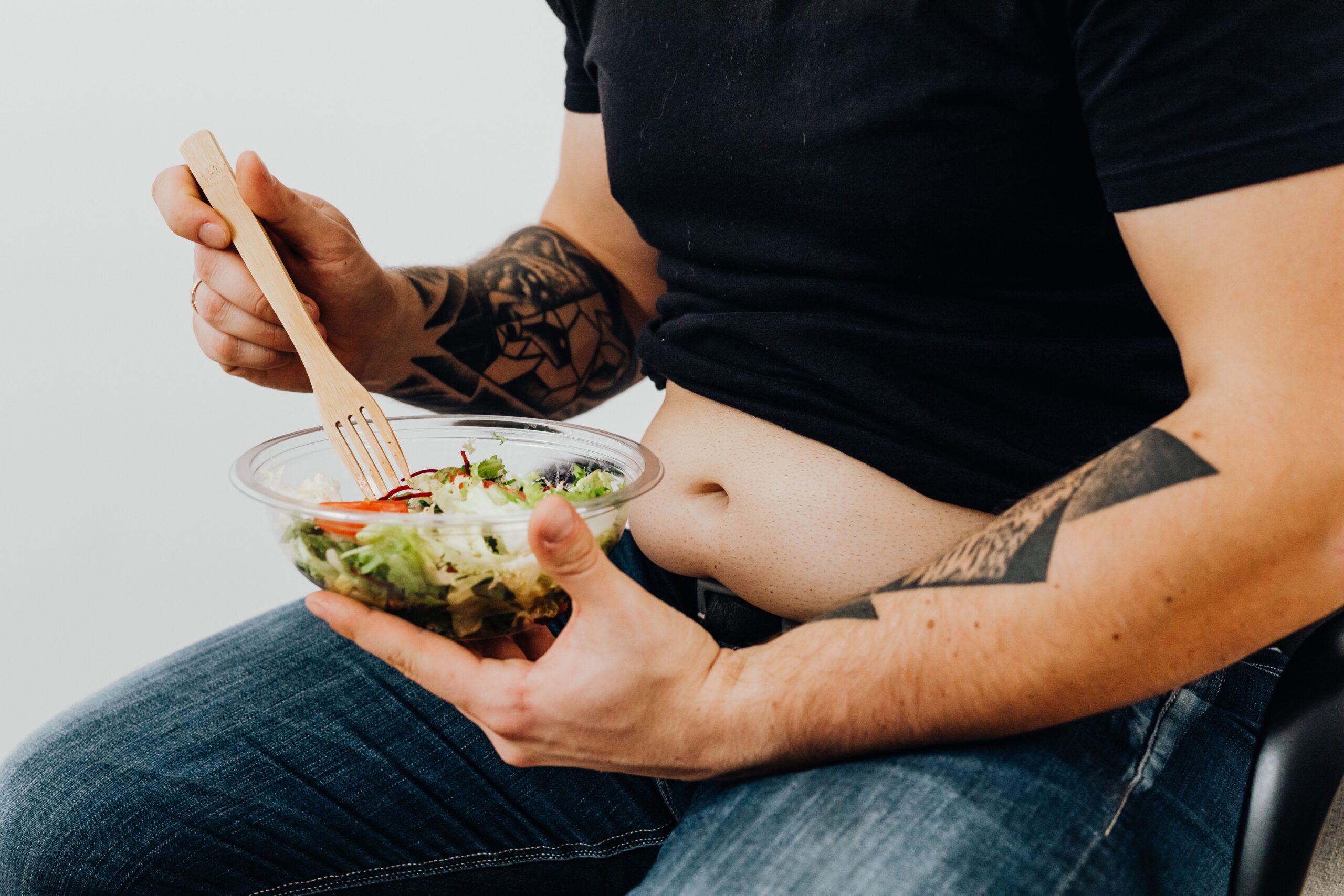
Have you ever finished a meal feeling fine, only to notice that your stomach suddenly feels tight, full, or uncomfortably swollen?
If this happens regularly, you may start wondering:
“Why do I get bloated after eating?”
The good news is that bloating is often related to everyday eating habits, digestion, or certain foods—not necessarily something serious.
But the cause isn’t always the food itself.
Sometimes, how much you eat, how quickly you eat, or what you do after a meal can matter just as much.
Here are seven common reasons you may feel bloated after eating and practical ways to figure out what’s happening.

1. You Ate Too Much or Too Quickly
One of the simplest explanations is also one of the most overlooked.
Your stomach needs time to accommodate the food you eat. A large meal can leave you feeling excessively full and uncomfortable.
Eating quickly can make this worse because you may swallow more air while eating.
Try this
Instead of drastically changing what you eat, start by changing how you eat.
- Slow down your meals.
- Take smaller bites.
- Put your fork down between bites.
- Give yourself enough time to finish your meal.
You don’t need to eat extremely slowly. The goal is simply to avoid rushing through your meal.
2. Carbonated Drinks Can Add Extra Gas
Sparkling water, soda, beer, and other carbonated drinks contain gas.
Some of that gas can remain in your digestive tract, which may contribute to belching, fullness, or bloating.
If you regularly drink a large carbonated beverage with meals, try switching to still water for several days.
A simple test
Don’t eliminate ten different foods at once.
Instead:
Carbonated drink → still water
Then see whether your symptoms change.
This makes it easier to identify what actually affects you.
3. Some Foods Are Harder for You to Digest
Certain carbohydrates can be fermented by bacteria in the large intestine, producing gas.
Foods that can cause problems for some people include:
- Beans and lentils
- Onions and garlic
- Certain fruits
- Some wheat-based foods
- Milk and other dairy products in people who have lactose intolerance
- Foods containing sugar alcohols such as sorbitol
This does not mean these foods are unhealthy.
In fact, many of them are nutritious foods.
The important question is:
“Does this particular food consistently cause symptoms for me?”
Individual tolerance varies considerably.
4. You Suddenly Increased Your Fiber Intake
Fiber is important for digestive health, but suddenly eating much more fiber than you’re used to can cause gas and bloating.
This often happens when someone decides to “eat healthier” and quickly adds:
- Large amounts of vegetables
- Beans
- Whole grains
- Bran
- Fiber supplements
Your digestive system may need time to adjust.
What to do
Increase fiber gradually rather than making a dramatic overnight change.
Also make sure you’re drinking enough fluids throughout the day.
More fiber isn’t automatically better if your body isn’t accustomed to it.
5. Constipation Can Make Bloating Worse
If bowel movements are infrequent or difficult, stool can remain in the colon longer.
This can contribute to abdominal discomfort, fullness, and bloating.
Pay attention to whether your bloating occurs together with:
- Hard stools
- Straining
- Fewer bowel movements than usual
- A feeling that you haven’t completely emptied your bowels
If these symptoms occur together, focusing only on eliminating foods may miss part of the problem.
Regular movement, adequate fluids, and gradually increasing dietary fiber can help many people maintain regular bowel movements.
6. You May Have a Food Intolerance
If bloating happens repeatedly after the same food, consider whether you may be sensitive to that food.
For example, people with lactose intolerance may experience bloating, gas, abdominal discomfort, or diarrhea after consuming lactose-containing foods.
The important point is that one episode doesn’t prove an intolerance.
Instead of eliminating large numbers of foods based on internet lists, keep a simple food-and-symptom record for several days.
Write down:
What you ate → how much you ate → when symptoms started → what symptoms appeared
Patterns are often more useful than guessing.
If symptoms are persistent or significantly affect your diet, a healthcare professional can help determine whether testing or a structured dietary approach is appropriate.
7. Your Eating Pattern May Be the Problem—not One Specific Food
This is perhaps the most important point.
You might blame bread, dairy, vegetables, or another individual food when the real issue is the overall meal.
For example:
Large meal + eating quickly + carbonated drink
may cause much more discomfort than the same foods eaten in a smaller portion and at a slower pace.
That’s why completely removing foods should not always be the first step.
Before cutting out major food groups, look at:
portion size → eating speed → drinks → meal timing → fiber intake → bowel habits
These simple factors can sometimes reveal the problem.
A Simple 3-Day Bloating Check
If your bloating isn’t severe, you can try a simple experiment instead of changing everything at once.
Day 1
Eat your usual meals, but record:
- What you ate
- Portion size
- Eating speed
- Drinks
- When bloating started
Day 2
Keep your meals relatively similar, but:
- Eat more slowly
- Avoid carbonated drinks
- Avoid unusually large meals
Day 3
Look for patterns.
Did the bloating improve?
If yes, the problem may be related to eating behavior or meal size rather than one specific food.
If symptoms consistently appear after a particular food, that’s a useful pattern to discuss with a healthcare professional.
Don’t eliminate multiple food groups at once. Otherwise, it becomes difficult to know what actually made a difference.
When Should You Get Bloating Checked?
Occasional bloating after a large meal is common.
But persistent or severe bloating shouldn’t simply be dismissed as “bad digestion.”
Talk with a healthcare professional if bloating:
- Happens frequently or keeps getting worse
- Is accompanied by significant abdominal pain
- Occurs with persistent vomiting
- Is associated with unexplained weight loss
- Is accompanied by blood in the stool
- Causes major changes in your bowel habits
- Is new and persistent, especially if you are concerned about it
These symptoms don’t automatically mean something serious is wrong. They simply mean it’s worth looking beyond everyday dietary habits.
The Bottom Line
If you feel bloated after eating, don’t immediately assume that one food is the culprit.
Start with the basics:
Eat more slowly.
Watch your portion size.
Try replacing carbonated drinks with still water.
Increase fiber gradually.
Pay attention to constipation.
Track foods that repeatedly trigger symptoms.
The goal isn’t to create a long list of foods you can never eat again.
It’s to understand what your body is responding to and make the smallest change that actually helps.
And if bloating keeps happening despite simple changes—or comes with other concerning symptoms—it’s better to get the cause properly evaluated rather than continuing to eliminate foods on your own.
References
- National Institute of Diabetes and Digestive and Kidney Diseases (NIDDK): Gas in the Digestive Tract
- National Institute of Diabetes and Digestive and Kidney Diseases (NIDDK): Lactose Intolerance
- National Institute of Diabetes and Digestive and Kidney Diseases (NIDDK): Constipation
- Monash University: FODMAP Diet and Digestive Symptoms